Warehousing and logistics sit in a blind spot for hearing conservation. Unlike factories where stamping presses make the danger obvious, warehouses generate noise from dozens of scattered sources — forklift backup alarms, conveyor belts, stretch wrappers, dock levelers, and truck engines idling at loading bays. According to industry data from Soundtrace, 40% of transportation and warehousing workers are exposed to hazardous noise levels, yet 59% of those workers wear no hearing protection at all. That gap between exposure and protection is where preventable hearing loss happens.
Noise Sources in Warehouses and Distribution Centers
Most warehouse managers underestimate their facility's noise profile because no single source sounds dangerous on its own. The problem is cumulative exposure across a full shift. Here are the common sources and their typical decibel readings:
| Noise Source | Typical dB Range | Location |
|---|---|---|
| Forklift backup alarms | 97–112 dB at 1 meter | Aisles, loading docks, staging areas |
| Conveyor systems | 80–95 dB | Sortation lines, packing stations |
| Dock levelers and overhead doors | 85–100 dB | Loading bays |
| Stretch wrap machines | 80–90 dB | Outbound staging |
| Truck engines idling | 85–95 dB | Loading docks (doors open) |
| Pneumatic pallet jacks | 80–90 dB | Throughout warehouse floor |
| Compactor / baler | 90–105 dB | Waste processing area |
| General ambient (combined sources) | 82–92 dB | Open warehouse floor |
The forklift backup alarm deserves particular attention. A standard backup alarm produces 97–112 dB at one meter — louder than a chainsaw. Workers standing near a loading dock when multiple forklifts reverse simultaneously face impulse-level noise exposure that adds up fast over an 8-hour shift. For context on how different noise patterns affect protection requirements, including the difference between steady-state and impulse noise, see our noise patterns guide.
OSHA Requirements for Warehouses (29 CFR 1910.95)
Warehouses fall under OSHA's General Industry standard, not the construction standard. The key thresholds:
- 85 dB TWA (Action Level): Triggers a hearing conservation program — noise monitoring, audiometric testing, training, and hearing protection availability
- 90 dB TWA (PEL): Hearing protection becomes mandatory, not optional. Engineering or administrative controls must also be implemented where feasible
- 100 dB TWA: OSHA recommends dual protection (plugs plus earmuffs)
Many warehouse operators assume they fall below these thresholds because the "average" floor noise reads 82–85 dB. But that average masks peaks. A worker spending 2 hours at the loading dock (90–100 dB from truck engines plus dock equipment), 4 hours on the warehouse floor near conveyor lines (85–95 dB), and 2 hours in a quieter packing area (75–80 dB) can easily exceed 85 dB TWA for the full shift. The only way to know for certain is personal dosimetry — area monitors placed at a fixed point miss the exposure patterns of workers who move between zones. For the full OSHA hearing conservation program requirements, see our compliance guide.
Mapping Warehouse Noise Zones
A practical noise zone map for a typical distribution center breaks the facility into four areas:
| Zone | Typical Areas | Expected dB Range | Protection Required? |
|---|---|---|---|
| Red Zone | Loading docks (doors open), compactor room, areas with multiple forklifts operating | 90–112 dB | Yes — mandatory |
| Orange Zone | Main aisles near conveyors, sortation area, inbound receiving | 85–95 dB | Yes — required under hearing conservation program |
| Yellow Zone | Packing stations away from conveyors, office-adjacent areas | 80–85 dB | Recommended for workers who rotate into louder zones |
| Green Zone | Offices, break rooms, manager stations | Below 80 dB | No |
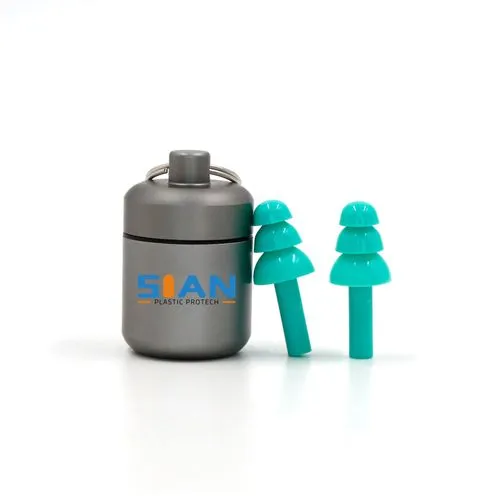
Post zone signage at every boundary with the required protection type. Workers moving between zones should carry hearing protection at all times — banded plugs or corded ear plugs work well here because they hang around the neck when not in use.
Selecting Hearing Protection by Warehouse Zone
Red Zone: Loading Docks and High-Traffic Areas
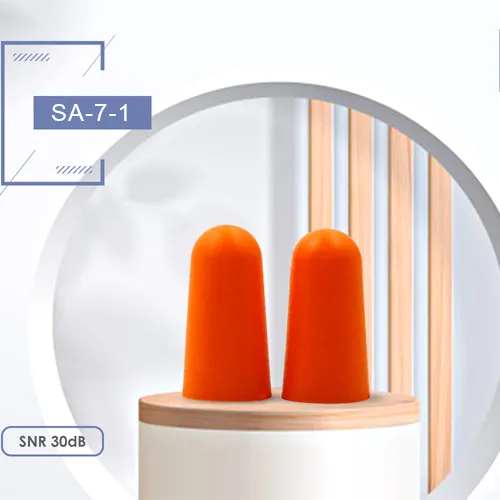
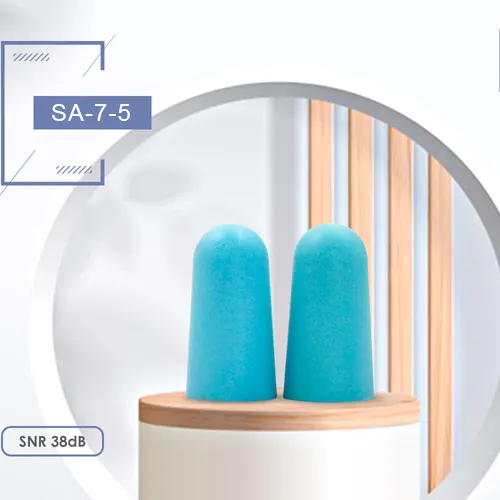
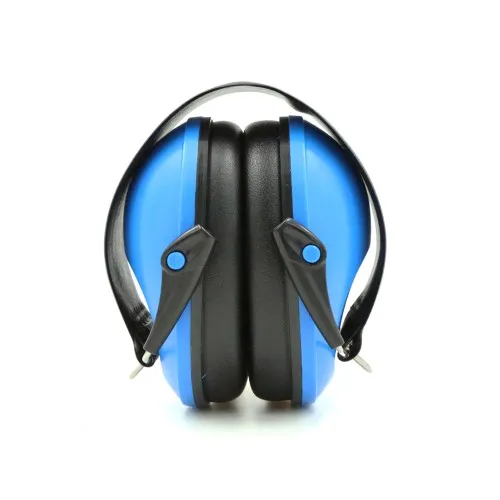
Loading docks are the noisiest part of most warehouses. Truck engines, dock levelers slamming, backup alarms from multiple forklifts, and power tools for pallet repair all combine. Workers in this zone need foam ear plugs with NRR 29–33. For dock supervisors and traffic coordinators who need to give verbal instructions, electronic earmuffs with level-dependent attenuation are a better fit — they cut harmful noise while amplifying speech.
If your dock area regularly exceeds 100 dB (common when multiple trucks idle with doors open and forklifts are reversing nearby), dual protection — plugs under muffs — provides the additional attenuation needed. Use the NRR derating formula to calculate real-world protection: (NRR - 7) / 2 for the primary device, plus 5 dB for the second device.
Orange Zone: Conveyor Lines and Sortation
Steady-state noise from conveyor motors, belt drives, and sortation diverters typically runs 85–95 dB. Standard foam ear plugs with NRR 29–33 handle this range with margin to spare. For workers who stay in this zone all shift, comfort matters — a plug that irritates the ear canal after 4 hours gets pulled out. Offer at least two plug styles (bullet shape and contoured) so workers can choose what fits them best. OSHA requires providing a choice.
Yellow Zone: Packing Stations and Transitional Areas
These areas hover around 80–85 dB — below the PEL but above the level where long-term exposure can still contribute to hearing loss. Protection is not legally required below 85 dB TWA, but workers who rotate into the Orange or Red zones during their shift should keep plugs accessible. Lightweight banded plugs or corded ear plugs are the practical choice here — quick to insert when moving toward the dock, easy to let hang when back in the quieter zone.
The Forklift Alarm Problem
Forklift backup alarms deserve their own section because they create a unique compliance challenge. OSHA requires backup alarms on powered industrial trucks where the operator's view is obstructed. These alarms must be audible above ambient noise — which means in an 85 dB warehouse, the alarm might run at 97+ dB.
The conflict: hearing protection that effectively blocks the alarm also blocks the safety signal. Three approaches solve this:
- Broadband "white noise" alarms replace the traditional beep with a shh-shh sound that is localizable (workers can tell which direction it comes from) and does not need to be as loud. These alarms operate at 82–87 dB — effective as a warning but not a hearing hazard
- Electronic earmuffs with level-dependent attenuation allow normal-level sounds (including alarms at moderate dB) through while clamping down on peaks above 82 dB. Workers hear the alarm without removing their protection
- Visual warning systems (blue spotlights, amber strobes) supplement audio alarms so that hearing-protected workers still get a visual cue. Many modern forklifts come equipped with blue spot lights standard
If your warehouse still uses traditional 97+ dB beeping alarms and has no plan to switch, workers near forklift paths must wear hearing protection rated for that exposure level.
Dispensing and Distribution in Large Facilities
A distribution center with 200+ workers across three shifts burns through hearing protection fast. Managing supply and access is as important as choosing the right product.
- Wall-mounted dispensers at every zone boundary. Place them at the Red/Orange zone entry points, not just the main entrance. Workers grab a fresh pair when entering the zone, and do not need to walk back to a central supply room
- Shift-start kits. For high-volume operations, pre-package a shift kit (2 pairs of foam plugs + 1 corded pair) per worker per shift. This reduces mid-shift interruptions and gives workers a backup pair
- Tracked consumption by department. Monitor how many plugs each department uses per week. A sudden spike often signals a noise level change (new equipment, failing bearing) rather than waste. A sudden drop signals non-compliance
At EASTRAGON, our MOQ starts at 5,000 pairs. For a 200-worker facility consuming 1,000–1,500 pairs per week, we recommend quarterly bulk orders with monthly delivery releases. This locks in volume pricing while keeping inventory manageable. See our manufacturing plants guide for a detailed cost comparison between disposable and reusable options at scale.
Common Compliance Gaps in Warehousing
Based on OSHA citation data and industry audits, warehouses and distribution centers commonly fail on these points:
- No noise survey on file. Many warehouse operators have never conducted a formal noise assessment. Without baseline data, you cannot prove compliance — or non-compliance. A professional noise survey costs $1,500–$4,000 depending on facility size and covers you for 2–3 years until equipment or layout changes
- Hearing protection available but not enforced. Having plugs in a supply closet does not satisfy OSHA. Employers must ensure workers actually wear protection in areas above 90 dB TWA, and make it available at no cost for anyone above 85 dB TWA
- No audiometric testing program. OSHA requires baseline audiograms and annual follow-ups for all workers in the hearing conservation program. Many warehouses skip this, especially for temporary and seasonal workers who may represent 30–50% of the workforce during peak periods
- Seasonal workers excluded. Temporary workers hired for peak season (Black Friday, holiday shipping) are often not included in the hearing conservation program. OSHA coverage applies regardless of employment duration — a temp worker on day one has the same right to hearing protection and training as a 10-year employee
- Dock door noise not measured. Noise levels at loading docks change dramatically when overhead doors are open versus closed. Surveys conducted with doors closed underestimate exposure by 5–15 dB. Always measure worst-case conditions
Frequently Asked Questions
Do warehouse workers need hearing protection?
It depends on their noise exposure. Workers exposed to 85 dB TWA or above over an 8-hour shift must be included in a hearing conservation program with access to hearing protection. Workers above 90 dB TWA must wear protection. In practice, loading dock workers, forklift operators near backup alarms, and conveyor line workers often exceed these thresholds. The only way to know is a noise survey with personal dosimetry for mobile workers.
What is the best ear plug for warehouse work?
For most warehouse applications, disposable foam ear plugs with NRR 29–33 provide sufficient attenuation and are the most cost-effective option at scale. Workers who move between noisy and quiet zones benefit from corded plugs that hang around the neck. Dock supervisors who need to communicate should consider electronic earmuffs instead.
How loud are forklift backup alarms?
Standard forklift backup alarms produce 97–112 dB at one meter. That is louder than a chainsaw (110 dB) and well above OSHA's 90 dB permissible exposure limit. Workers standing within 3 meters of a reversing forklift face instantaneous exposure above 100 dB. Broadband "white noise" alarms are an alternative that operate at 82–87 dB while remaining audible and localizable.
Are temporary warehouse workers covered by OSHA hearing protection rules?
Yes. OSHA's hearing conservation standard (29 CFR 1910.95) applies to all employees regardless of employment type or duration. Temporary workers, seasonal staff, and agency workers must receive the same noise monitoring, hearing protection, training, and audiometric testing as permanent employees. The host employer and staffing agency share responsibility for compliance.
How do I reduce noise levels in a warehouse without structural changes?
Several low-cost measures can reduce warehouse noise by 3–10 dB: (1) Replace traditional backup alarms with broadband white-noise alarms. (2) Install rubber dock bumpers and cushioned dock leveler pads. (3) Maintain conveyor bearings on schedule — worn bearings add 5–10 dB. (4) Use rubber-wheeled carts instead of metal-wheeled versions. (5) Add acoustic curtains or baffles around the loudest fixed equipment. These measures reduce noise exposure but rarely eliminate the need for hearing protection entirely — they are a complement, not a replacement.
Need hearing protection for your warehouse or distribution center? Contact EASTRAGON for a free product recommendation and sample kit. We supply foam plugs, corded plugs, reusable plugs, and earmuffs for every noise zone. MOQ from 5,000 pairs, samples ship within 7 days.